
Noobs in Combat Aircraft Carrier Stats, Unlocks, and Tactics
The Aircraft Carrier is a late-tier naval platform in Noobs in Combat that holds up to three planes, repairs and refuels returning aircraft, and evolves directly from the Seaplane Tender.
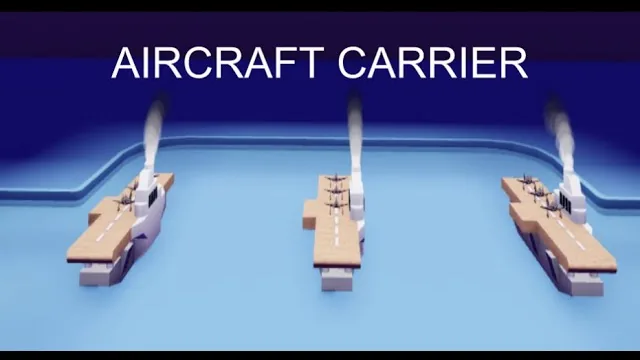
The Aircraft Carrier is a late-tier naval platform in Noobs in Combat that holds up to three planes, repairs and refuels returning aircraft, and evolves directly from the Seaplane Tender.
In the Roblox strategy game NiC by Scuffed developments, naval warfare requires balancing heavy resource costs with adequate escort coverage. The Aircraft Carrier operates primarily as a mobile staging platform rather than a direct brawler.
How to Unlock the Aircraft Carrier
Unlocking the carrier requires working through the naval branch of the tech tree. The platform is the direct evolution of the Seaplane Tender.
Grinding the required 200 XP on the Seaplane Tender takes dedicated runs because the tender possesses no direct offensive weapons. Players routinely level the tender on naval defense maps within the pacific front campaign on Tryhard difficulty. Using a single bot ally prevents teammates from taking unit kills and repair opportunities. A standard progression setup involves deploying a grunt to secure coastal harbors for tickets, two destroyers to clear diesel subs, and a tender paired with a cargo ship. Escort ships damage enemy vessels while seaplanes spot for incoming waves. Earning roughly 30 XP per completed run unlocks the Aircraft Carrier in six to seven matches.
Aircraft Carrier Mechanics and Combat Features
The carrier spawns with a single dive bomber already inside its hangar. Players can purchase and dock up to three total aircraft, mixing planes like fighters, jet fighters, and dive bombers depending on mission objectives.
Planes stored inside the vessel benefit from the Runway perk. This perk governs all takeoff, landing, and maintenance actions:
- Launch Limit: The Runway perk allows only one plane to take off per turn. Deploying a full three-plane air wing takes three consecutive turns.
- Maintenance Cycle: Landing an aircraft on the carrier refuels it in a single turn. Restoring damaged plane HP requires extra time docked in the hangar.
- Fuel Consumption: Aircraft consume fuel every turn while airborne, even when holding position. Flying into yellow movement tiles indicates that an aircraft must turn back immediately to reach a landing deck before running out of fuel. Entering red movement tiles results in the aircraft crashing.
Despite its high cost, the carrier itself possesses almost no baseline defensive armament against surface vessels or subsurface targets. While it carries light resistance to certain air attacks, it remains completely defenseless if cornered by enemy ships.
Strategic Comparison: Heavy Naval Units
Selecting capital ships in late-game scenarios depends heavily on your team budget, spotter access, and map layout.
| Naval Option | Best Match Scenario | Required Investment and Trade-offs |
|---|---|---|
| Aircraft Carrier | Long-distance strikes against stationary objectives and clearing maps lacking anti-air | High ticket price, vulnerable to subs, requires buying extra aircraft |
| battleship | Direct bombardment of heavy enemy fleets and coastal structures | Costs 240 ticks, vulnerable to missile boat strikes, requires a radio unit to hit maximum range |
| Cruiser Sub | Flexible independent reconnaissance and skirmishing along flanks | High ticket cost, limited torpedo reserves, relies on launching a single seaplane for artillery spotting |
Fleet Positioning and Counter Tactics
Operating an Aircraft Carrier solo often leads to swift losses. The hull features a large hit profile, making it a priority target for hostile fleets.
Submarine and Surface Screening
Because carriers cannot detect or engage submerged diesel subs, they require immediate support from escort vessels. The destroyer serves as the primary defensive screen. Destroyers carry active sonar to reveal hidden threats and feature three depth charge attacks capable of eliminating submarines in a single engagement. Maintain at least one or two destroyers directly adjacent to the carrier to prevent submerged units from slipping into your backline.
Surface artillery boats also pose a severe threat. Long-range missile boats can take down heavy hulls across massive distances if spotters grant vision. To prevent return fire from enemy artillery, deploy scout planes carefully and keep your capital ships out of unspotted choke points.
Aerial Deployment Strategy
Carrier air wings excel at breaking fortified ground targets, bunkers, and harbors in campaigns where the enemy lacks dedicated anti-air coverage. Dive bombers deal solid burst damage to structures and slow-moving ground armor. However, they cannot defend themselves against enemy air patrols.
When facing hostile fighters, launch a friendly fighter or jet fighter first to sweep the airspace. Ground-based anti-air guns, self-propelled anti-aircraft guns (SPAAGs), and mobile anti-air units like Meat Choppers will rapidly shred dive bombers. Always scout forested areas and enemy base perimeters with expendable spotters before committing carrier strike aircraft into defensive fire zones.
Next step
Anti Tank Gun
Understand the tactical role, ambush mechanics, and upgrade paths for the Anti-Tank Gun in defense setups.