
Noobs in Combat Normandy Beaches Strategy: Western Front Tactics
Noobs in Combat normandy beaches represents the D-Day amphibious landing scenario in the Western Front campaign. Clearing the beach requires ferrying armored vehicles across the water in cargo ships, eliminating coastal naval destroyers, and neutralizing fortified El turret bunkers guarding the bluffs.
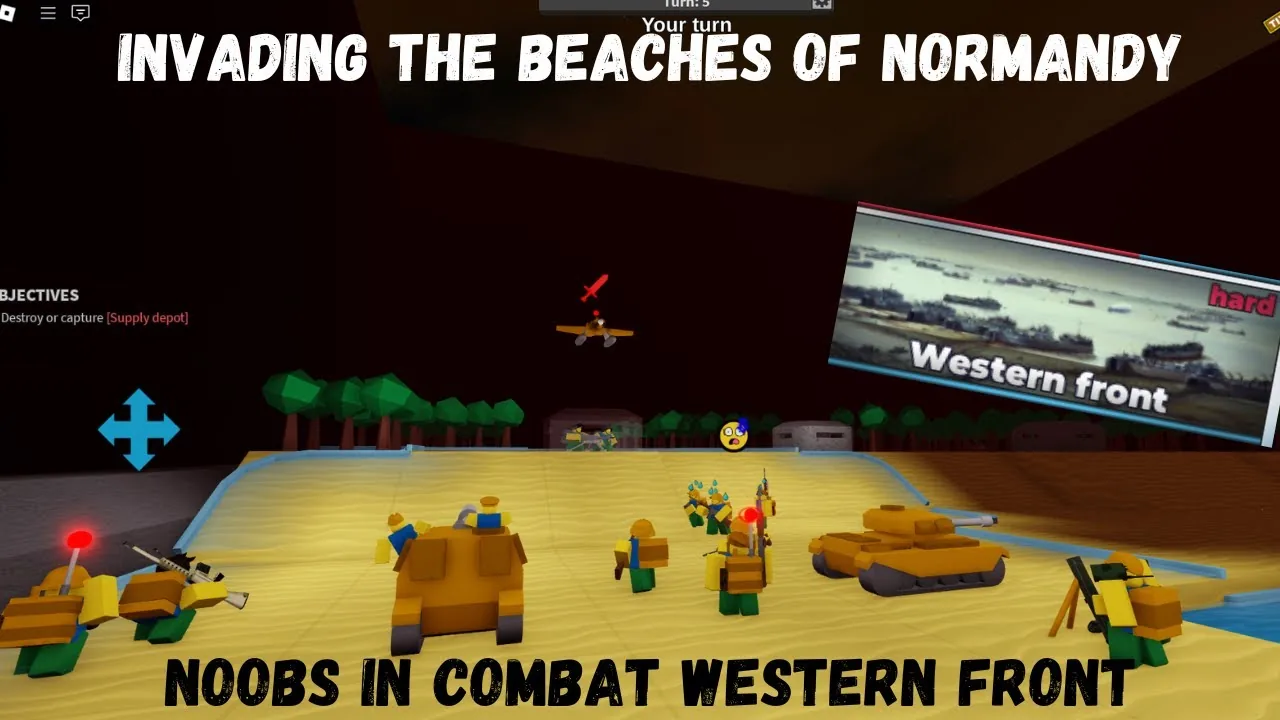
Noobs in Combat normandy beaches represents the D-Day amphibious landing scenario in the Western Front campaign. Clearing the beach requires ferrying armored vehicles across the water in cargo ships, eliminating coastal naval destroyers, and neutralizing fortified El turret bunkers guarding the bluffs.
In the tabletop turn-based system of NiC, developed on Roblox by Scuffed developments, the Normandy beach landing presents a multi-phase assault. Players cannot deploy ground units directly onto the hostile shoreline. Instead, your army must stage from rear spawn zones, embark onto watercraft, cross open waters under naval threat, and establish a foothold against fortified entrenchments.
Amphibious Transport and Naval Control
The opening phase of the landing requires securing the waterway. Enemy destroyers patrol the approach channels, capable of intercepting landing craft before troops reach the sand. Players deploying naval units such as cruisers or torpedo boats must prioritize locating and sinking the hostile destroyer. Aircraft cannot land to refuel or resupply on this map, making conventional naval surface combat and coastal fire your dependable options.
Moving ground units onto the sand requires a Cargo Ship, which holds four unit slots. Boarding a transport takes a full turn, meaning movement must be planned in advance. Committing a heavy unit such as a battle tank occupies major capacity on the vessel, while smaller infantry detachments allow for wider dispersal upon landing. Transports must wait until hostile warships are suppressed to avoid catastrophic transport losses at sea.
Beachhead Penetration and Bunker Clearance
Once landing craft touch the shoreline, forces encounter entrenched enemy positions lining the bluffs. Bunkers containing medium gunners and miniguns deliver punishing suppression to advancing grunts. Standard infantry fire deals minimal damage to units fortified inside concrete positions, often reducing incoming small-arms fire to single-digit chip damage.
Breaking these static fortifications requires targeted heavy fire. Direct cannon bombardment from tanks, grenades from close assault squads, or high-angle fire from a towed field gun will neutralize concrete nests. Advancing blindly up the bluffs risks instant squad wipes, as enemy defenses cover every approach corridor with overlapping fields of fire.
| Unit Selection | Tactical Purpose | Operational Cost |
|---|---|---|
| Battle Tank | Shells concrete bunkers and absorbs return fire | High supply drain and takes heavy transport capacity |
| Recon Car | Uncovers fog of war and spots hidden ambushes | Vulnerable to medium gunners and anti-tank cannons |
| Cargo Ship | Ferries ground armor and infantry across open water | Defenseless against destroyers without naval escort |
Countering Armor and El Turret Bunkers
Beyond the initial shoreline trenches, defensive lines deploy light tanks, medium tanks, and reinforced El turret bunkers. El turret bunkers feature ambush mechanics that trigger counterattacks from multiple angles when ground units step into their engagement radius. Advancing an armored car or tank blindly into unspotted tree lines often results in an immediate ambush kill.
Deploying a mobile Recon Car provides line-of-sight to reveal these hidden ambush emplacements before main battlegroups move forward. When enemy armored vehicles counterattack down the beach slopes, an anti tank gun or infantry armed with anti-tank rifles and bazookas must hold the perimeter. Unlike lighter maps found early in the western front or island skirmishes in the pacific front, Normandy beaches heavily punish players who fail to scout concealed positions.
Logistics and Resupply Maintenance
Sustained combat across the sand dunes depletes ammunition and vehicle repair kits rapidly. Tanks and artillery pieces lose combat effectiveness once their supply reserves run dry, leaving them unable to fire or defend against counterattacks. Neutralizing an enemy objective means nothing if your assault force cannot replenish before the next wave arrives.
Support vehicles such as the Supply Carrier and Supply Truck must follow directly behind your frontline armor. Keeping support wagons positioned safely behind the beachhead ridge allows damaged vehicles to repair and reload between turns. Establishing a secure supply route from the shoreline to the inland flags ensures your push maintains momentum until every defensive bunker is cleared.
Next step
Operation Torch
Deploy armor, infantry transports, and supply logistics to secure beachheads, eliminate fortified bunkers, and clear the North Africa Operation Torch scenario.
Related Guides
Operation Torch
Deploy armor, infantry transports, and supply logistics to secure beachheads, eliminate fortified bunkers, and clear the North Africa Operation Torch scenario.
Polar Region Guide
Review effective infantry roadblock tactics, enemy bear behavior, and deployment choices for the Polar Region campaign map in Noobs in Combat.