
Noobs in Combat Passive Loadouts for Long-Range Defense
Noobs in Combat passive loadouts rely on stationary defense, long-range fire, and sustained logistics rather than rapid frontline pushes. Building around artillery, spotters, and resilient screening units allows players to neutralize incoming threats while conserving deployment points across extended turns.
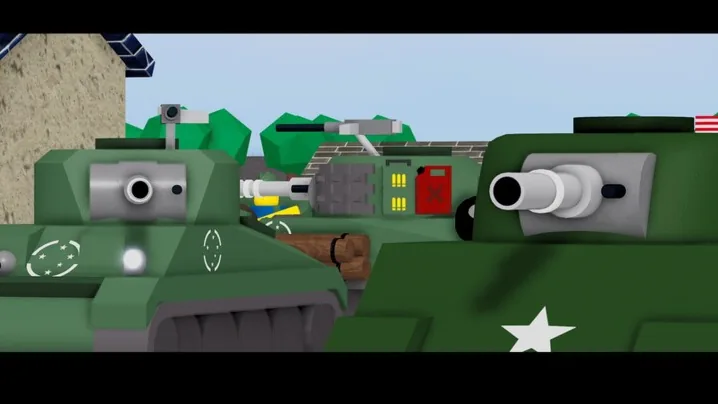
Noobs in Combat passive loadouts rely on stationary defense, long-range fire, and sustained logistics rather than rapid frontline pushes. Building around artillery, spotters, and resilient screening units allows players to neutralize incoming threats while conserving deployment points across extended turns.
Defensive Foundations and Core Strategy
In Noobs in Combat, an attrition playstyle centers on setting up firing positions and waiting for opposing units to advance into firing lanes. Rushing unprotected vehicles into contested hexes risks immediate losses against anti-tank weaponry and entrenched squads. A defensive posture relies instead on holding defensible terrain, keeping critical units supplied, and using radio range to eliminate targets before they close the distance.
Selecting an artillery loadout allows players to trade upfront mobility for sustained fire. Units with fixed firing requirements or the No Turret trait require deliberate placement behind allied lines. When facing heavy vehicles such as an enemy battle tank, the defensive priority is immobilizing the target and severing its resupply line rather than engaging in a direct brawl.
Logistics keep defensive lines functional over multiple turns. Units expend ammunition and fuel, making support assets like the Supply Wagon, Supply Truck, and Supply Carrier mandatory additions to an army pool. For tight defensive perimeters where units remain clustered around choke points, a static Supply Wagon conserves Tix compared to motorized alternatives.
Unit Selection for Passive Compositions
Defensive setups require distinct unit layers: recon spotters, frontline screens, heavy fire support, and supply tenders. Each element covers a specific vulnerability within the defensive perimeter.
| Defensive Choice | Tactical Role | Operational Trade-Off |
|---|---|---|
| Howitzer and Supply Wagon | Fixed bombardment and low-cost replenishment for stationary perimeters | Minimal movement flexibility and high vulnerability to flanking attacks |
| Mobile Field Gun and Supply Carrier | Flexible medium artillery support with mobile resupply coverage | Increased Tix deployment cost and weaker direct defensive durability |
| HTCW and Grunts | Long-range armored sniping protected by an expendable infantry screen | High upfront expenditure that slows initial army expansion |
Screening and Vision Assets
Long-range batteries cannot fire effectively without direct target observation or radio coordination. The Sniper Team provides extended sightlines alongside radio transmission, enabling indirect fire from rear artillery batteries. Deploying standard Grunts ahead of high-value cannons creates an affordable physical buffer that prevents opposing assault troops from establishing line-of-sight on unarmored gun crews.
Reconnaissance options such as the Scout Car or Recon Tank offer mobile vision, though players often favor the Sniper Team or standard Grunts on defensive maps to minimize Tix expenditure. In combined arms engagements, keeping spotters alive remains the primary operational requirement; losing radio spotters leaves backline batteries unable to acquire targets.
Fire Support and Heavy Armor
The howitzer serves as a dedicated defensive anchor, providing wide damage distribution against advancing infantry clusters and light vehicles. When defensive positions require intermediate mobility, the Mobile Field Gun offers direct and indirect bombardment capabilities. For counter-infantry suppression, units such as the Mortar Team or heavy mortar add smoke utility and fragmentation damage from behind cover.
Armored defense relies on vehicles capable of withstanding cannon fire while controlling approach corridors. The HTCW operates as a dedicated vanguard sniper, utilizing its heavy armor plate and high-caliber gun to eliminate hostile armor at maximum distance. Players deploying the Battle Tank rely on its direct fire and survivability, provided an anti-tank infantry unit like the RPG or Bazooka remains nearby to deter aggressive vehicle charges.
Managing Turn Economy and Counters
Defensive rosters carry heavy Tix requirements. Combining high-tier units like the HTCW, Mobile Field Gun, APC, and armored supply vehicles can push deployment costs toward 475 Tix before fielding infantry screens. Players using passive compositions must resist spending reserves early on hasty counterattacks. Accumulating points across initial turns ensures that fire support pieces deploy alongside adequate logistics and screening infantry.
Air threats present an immediate danger to stationary artillery positions. Incorporating anti-air coverage, such as the SPAAG or Meat Chopper, protects static howitzers from Dive Bombers and armed aircraft. In competitive pvp matches, maintaining overlapping anti-air bubbles prevents airborne strikes from dismantling entrenched artillery batteries before ground forces arrive.
Next step
Rigged PvE Loadouts
Select the right PvE rigged loadout in Noobs in Combat using battle tanks, supply carriers, and specialized field units.