
Noobs in Combat Heavy Mortar Unit Stats and Tactical Guide
The heavy mortar in Noobs in Combat is an evolved artillery unit costing 75 tix, dealing 60 combined damage per volley with a five-tile firing range and a radio-assisted smoke attack for blocking enemy fire lines.
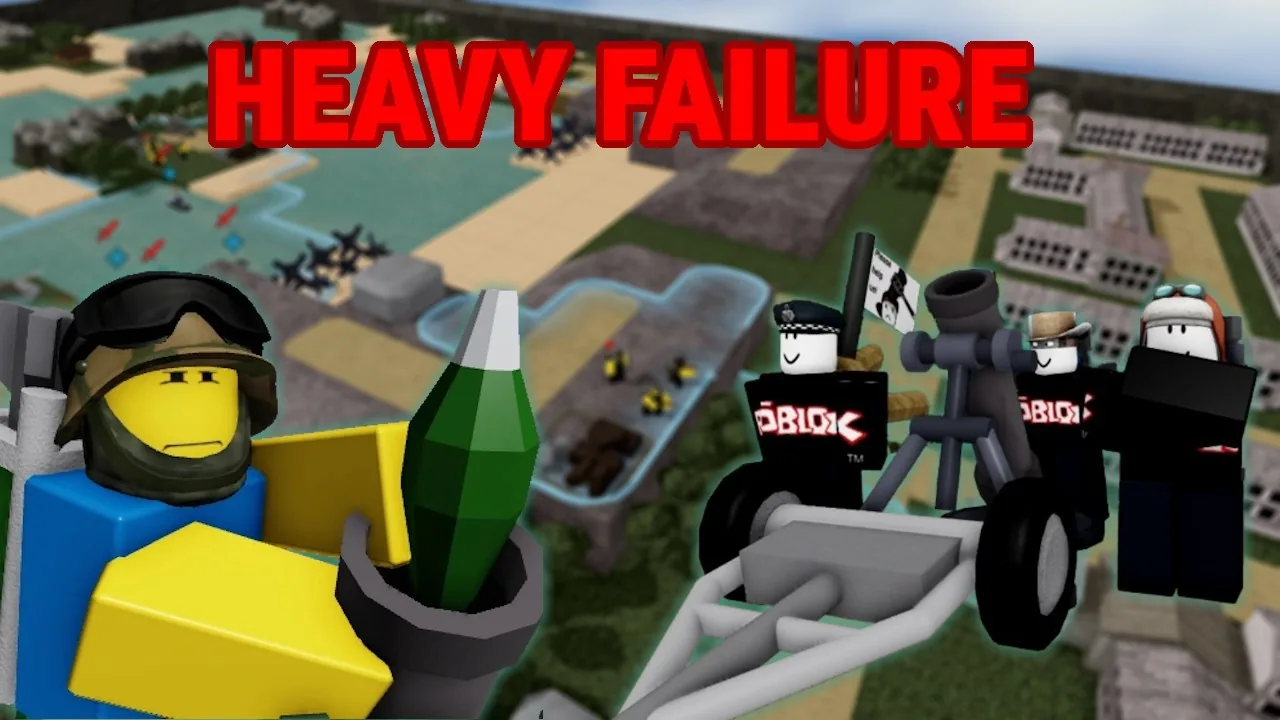
The heavy mortar in Noobs in Combat is an evolved artillery unit costing 75 tix, dealing 60 combined damage per volley with a five-tile firing range and a radio-assisted smoke attack for blocking enemy fire lines.
Heavy Mortar Stats and Core Attributes
Introduced in version 5.8 alongside the Mortar Halftrack, the heavy mortar serves as a high-damage branch in the towed artillery tree. It evolves directly from the basic mortar team and costs 75 tix to produce.
Each standard volley splits into two strikes of 30 damage each, dealing a combined 60 damage to target squares. This allows the unit to eliminate basic infantry formations in two attack cycles. At maximum veterancy, its damage scaling allows it to take down specialized infantry squads in a single turn.
Balancing this offensive profile are strict operational requirements:
- Firing Range: Exactly 5 tiles forward.
- Mobility: 1 movement point per turn, upgraded from its original 0-movement state in the February 14, 2026 balance patch.
- Ammunition Reserve: 2 rounds of standard explosive shells and 2 smoke rounds.
- Turret Configuration: Possesses the no-turret trait, preventing attacks on the same turn after being relocated by transport vehicles.
Smoke Utility and Spotting Dynamics
The heavy mortar carries two utility smoke charges designed to distort sightlines and neutralize hostile firing angles. Laying down a smoke screen prevents long-range units, such as an enemy battle tank or fortified anti-tank emplacement, from acquiring line of sight on friendly armor.
Using smoke against static defenses like pillboxes temporarily blinds the position, allowing attacking squads to approach safely. Deploying smoke past immediate adjacent tiles requires coordinate targeting through friendly units equipped with radios, such as Grunts or specialized spotters. Without radio spotting in place, targeting flexibility remains restricted to immediate visibility boundaries.
Comparing Heavy Mortar to Alternative Artillery
Choosing the correct fire-support piece depends on engagement distance, frontline speed, and team logistics. The heavy mortar trades operational reach for upfront burst damage.
| Unit Choice | Best Combat Scenario | Operational Trade-Off |
|---|---|---|
| Heavy Mortar | Narrow choke point defense against dense infantry advances | Five-tile range limit and strict two-shot ammunition pool |
| Field Gun | Sustained mid-range defensive fire without transport reliance | Lower damage output per volley than heavy artillery |
| Howitzer | Long-range siege against heavily armored targets and structures | Inability to relocate without dedicated vehicle transports |
| Rocket Battery | Wide-area suppression against dispersed light enemy units | Inaccurate spread capable of damaging allied formations |
Compared to the standard field gun, which delivers consistent firing cycles at extended range, the heavy mortar demands close positioning behind frontline barricades. The basic mortar halftrack provides greater speed across open ground, whereas the heavy mortar functions as a static battery anchor.
Positioning Tactics and Ammo Logistics
Because the heavy mortar holds only two rounds per ammunition type, supply depots and transport vehicles dictate its battlefield performance. Positioning a supply wagon or logistics truck directly behind the firing tile prevents downtime between attack turns.
Defensive campaign layouts give the unit its highest combat efficiency. Anchoring the mortar behind defensive bunkers or trench lines enables it to cover fixed capture zones without needing rapid repositioning. Offensive maneuvers remain difficult due to its slow movement rate and the no-turret restriction, making forward redeployment dependent on external transport support. Pairing the mortar with forward rifle units ensures continuous radio transmission for accurate indirect bombardment.
Next step
Heavy Tank Guide
Evaluate Heavy Tank stats, deployment costs, fuel requirements, and combat counters to build an impenetrable defense across campaign and multiplayer matches.
Related Guides
Heavy Tank Guide
Evaluate Heavy Tank stats, deployment costs, fuel requirements, and combat counters to build an impenetrable defense across campaign and multiplayer matches.
Howitzer
Explore complete combat stats, towing mechanics, radio support pairings, and Mobile Howitzer upgrade options for Roblox Noobs in Combat.
Jungle Battalion
Learn how to defeat enemy units, counter hill artillery strikes, and complete every mission in the Jungle Battalion campaign.