
Noobs in Combat Best Loadout Guide for PvP and PvE
The best loadout in Noobs in Combat centers on the Battle Tank for frontline fire support, paired with an APC, Grunts for radio spotting, a Light Gunner, an RPG or Super Bazooka, and a dedicated Supply Truck within 600 starting tix.
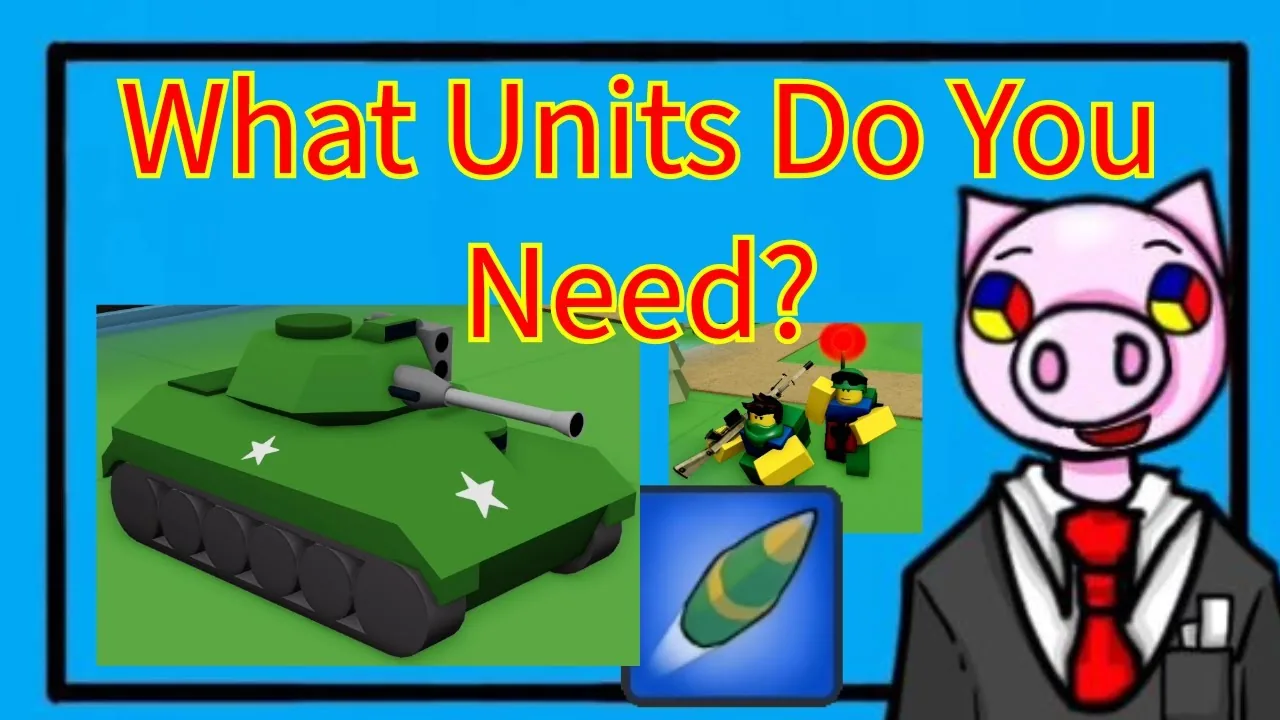
The best loadout in Noobs in Combat centers on the Battle Tank for frontline fire support, paired with an APC, Grunts for radio spotting, a Light Gunner, an RPG or Super Bazooka, and a dedicated Supply Truck within 600 starting tix.
Core Rules for Building an 8-Slot Army
Every land army in Noobs in Combat uses a maximum of eight unit slots. Unmaxed players receive 600 deployment tix during the initial deployment phase to spawn their starting units. Because army budgets never exceed 600 tix at the start, expensive units require cheap infantry counterparts to maintain field presence.
Every operational army requires four standard elements: heavy armor, anti-armor infantry or towed guns, anti-infantry suppression, and logistics. Leaving out logistics leaves tanks stranded without fuel or ammunition, while deploying without anti-infantry allows enemy foot units to overwhelm armored lines in close quarters.
Standard Competitive PvP Setup
In competitive pvp matches, mobility and frontline firepower determine early map control. The framework detailed below relies on seven to eight coordinated units that protect each other against armored rushes and infantry swarms.
| Loadout Option | Best Scenario | Cost and Operational Limits |
|---|---|---|
| Battle Tank Offensive | Pushing open plains and engaging hostile heavy armor | Costs 180 to 200 tix; low mobility and vision require spotters |
| Multi-H Tank Defensive | Holding chokepoints and surviving sustained barrages | Requires gem research; limited movement speed and short range |
| APC Mechanized Rush | Rapid frontline deployment through forests and plains | Costs 80 tix; dies quickly to dedicated anti-tank weapons |
| Missile Tank Ambush | Sniping armored targets from concealment | High damage and range; vulnerable due to thin armor and poor vision |
| Supply Carrier Logistics | Supporting heavy vehicle divisions on low-resource maps | Costs 90 tix; moves slowly compared to wheeled transports |
The primary fighting core features the battle tank alongside an APC. The Battle Tank provides the highest single-shot cannon damage, armor rating, and engagement range among ground combat vehicles. It eliminates lighter vehicles in one shot and deals heavy damage to enemy armor. The APC complements the tank by carrying two infantry squads at four tiles per turn across open plains, or two tiles through tree cover, while providing a two-tile vehicle radio.
Infantry slots should feature Grunts, a Light Gunner, and dedicated anti-tank infantry. Grunts provide durable frontline capture bodies equipped with radio packs to direct artillery strikes. The Light Gunner serves as the primary anti-infantry unit because it can fire while moving, counteracting infantry swarms without sacrificing momentum. For anti-tank coverage, the Super Bazooka deals 51 damage to hostile battle tanks and one-shots APCs and Light Gunners, while the 40-tix RPG uses the Ambush perk to punish advancing armor.
Logistics rely on the Supply Truck or Supply Carrier. The Supply Truck heals land units directly and provides ammunition refills. For slow, armor-heavy compositions, the Supply Carrier provides larger supply reserves and the capacity to repair vehicles twice per turn.
Defensive Non-Artillery Compositions
Defensive armies prioritize stationary firepower and terrain bonuses over movement speed. Rather than pushing forward with heavy armor, these builds lock down captured capture points and resource outposts.
The frontline anti-infantry role belongs to the Medium Gunner. Unlike the Light Gunner, the Medium Gunner relies on the Overwatch perk, automatically firing on approaching enemies that enter its line of sight during the enemy turn. This locks down defensive perimeters against Grunt and Riflemen advances.
Towed anti-tank units protect defensive lines at a lower deployment cost. The stationary Anti-Tank Gun provides cheap defensive area denial, while the tank destroyer adds high armor and durability. For mobile stopping power, the Recoilless Rifle and Missile Tank provide extreme single-target damage using the Ambush perk. Pairing these units with a Sapper allows players to construct field mines and turret bunkers without draining regular supply reserves.
Defensive logistics function best with a Supply Wagon if units remain anchored near an infinite supply building. On maps where infinite depots do not exist, the Supply Carrier provides sufficient reserves to sustain repairs across long AI waves.
Hybrid Artillery and Support Configurations
Hybrid configurations combine frontline infantry screening with long-range fire support. Artillery pieces cannot fire at maximum distance on their own; they require spotters equipped with radio gear to mark targets across the map.
In infantry-heavy artillery setups, Grunts or Sniper Teams take the forward scout role. Grunts hold capture points, while Sniper Teams provide extended vision range and a three-tile radio link. When these forward scouts spot an enemy position, rear-line batteries execute their strikes:
- Mortar Team: A mobile light artillery infantry squad that can fire while moving, chipping away at enemy infantry clusters.
- Mobile Field Gun: A medium artillery piece capable of repositioning between firing rounds.
- Mobile Howitzer: The final evolution of the field gun line, providing heavy damage across broad target areas through indirect fire.
- Rocket Truck: An advanced artillery unit purchased through tech tree progression, suited for softening fortified defenses before a ground assault.
When running artillery batteries, include an IFV alongside standard transports. While the IFV lacks a native radio pack, players can transport Grunts inside the vehicle, deploy them onto adjacent tiles, and trigger radio fire through the squad.
PvE Campaign Progression Loadouts
Campaign maps feature AI waves that rely on specific unit mixtures, including fortified bunkers and hidden forest ambushes.
Early campaign maps favor the Tankette and smg squad. The Tankette remains completely immune to standard small-arms bullets, allowing it to clear early AI rifle formations without taking hull damage. The SMG Squad brings a bullet attack alongside explosive grenades that clear entrenched units inside forest tiles.
Late-game campaign maps like Pacific Front require balanced 600-tix starting armies. A proven PvE layout uses:
- Grunts (30 tix) for radio coordination and capture duties.
- RPG (40 tix) for high-damage ambush strikes against enemy tanks.
- Flame Launcher (40 tix) for clearing fortified cities and forest clusters.
- APC (80 tix) for moving foot units across rough terrain.
- SPAAG (130 tix) for shooting down hostile air units and mowing down infantry.
- Supply Carrier (90 tix) to maintain fuel, ammunition, and multi-turn repairs.
- Battle Tank (180 to 200 tix) to eliminate heavy AI vehicle spawns.
Players fielding this roster can deploy their Battle Tank, Supply Carrier, Grunts, and anti-tank infantry immediately within the starting 600-tix cap, deploying supplementary anti-air and transports as capture points generate additional income.
Next step
Passive Loadouts
Examine unit selections, recon pairing, and defensive deployment strategies for building effective passive attrition loadouts in Noobs in Combat.
Related Guides
Passive Loadouts
Examine unit selections, recon pairing, and defensive deployment strategies for building effective passive attrition loadouts in Noobs in Combat.
Rigged PvE Loadouts
Select the right PvE rigged loadout in Noobs in Combat using battle tanks, supply carriers, and specialized field units.
Artillery Loadout Guide
Learn how to build balanced artillery loadouts in Noobs in Combat with proper fire support, radio units, and supply lines.